Exhibition of
AMAZING TABLEWARE
Tallinn City Museum’s open depository introduces the City Life Museum’s collections in the building’s medieval cellar.
In addition to the collections, the cellar also displays some of the most important architectural elements of the building that date back to the Middle Ages. There is an indoor well that supplied the merchant house with water and which is rare to have preserved to this day in such condition in the Old Town. Other such elements are the round pillars and the fireplace that dried the air in the cellar and made it suitable for storing salt. The archeological items dating back to the 14th to the 19th century that were found in the well have their own exhibition. The damp environment of the well has preserved the items well.
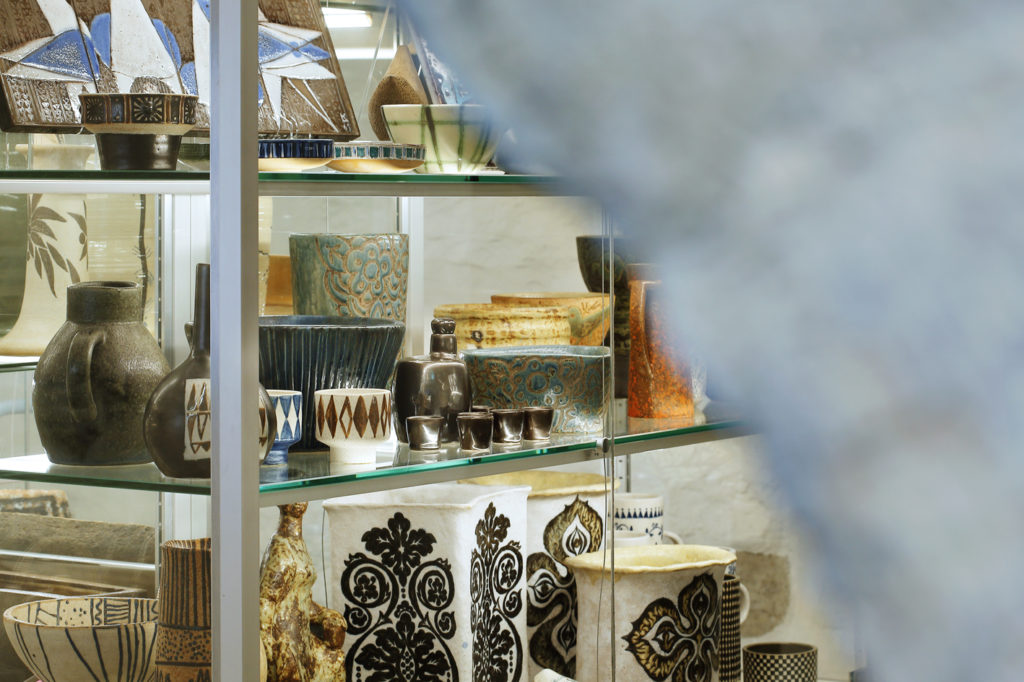
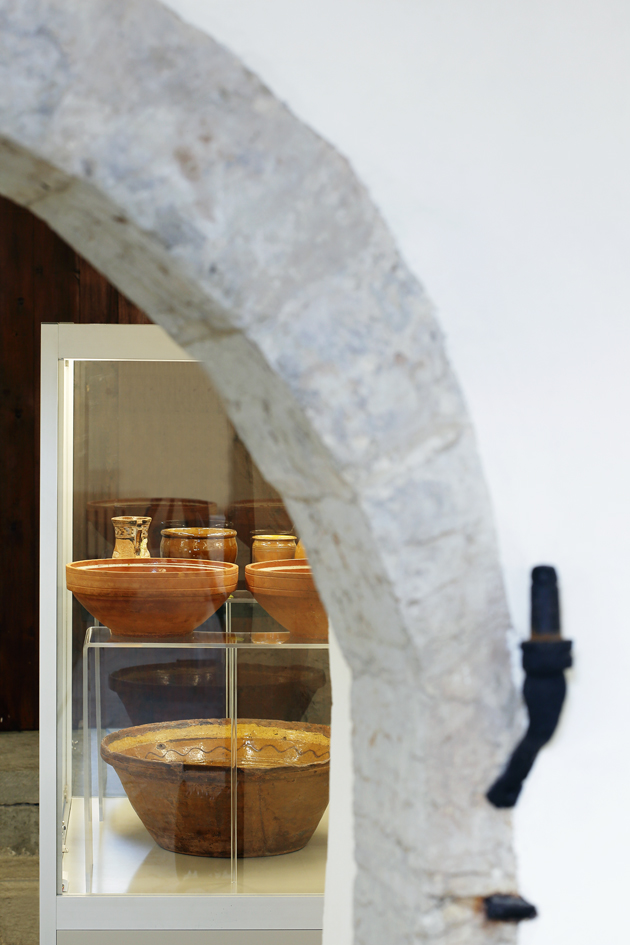
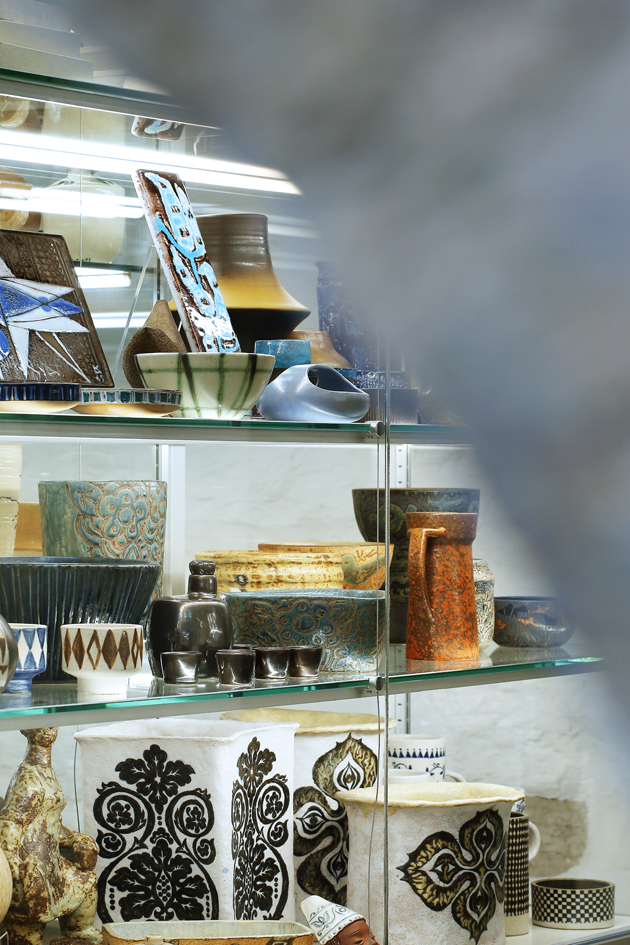
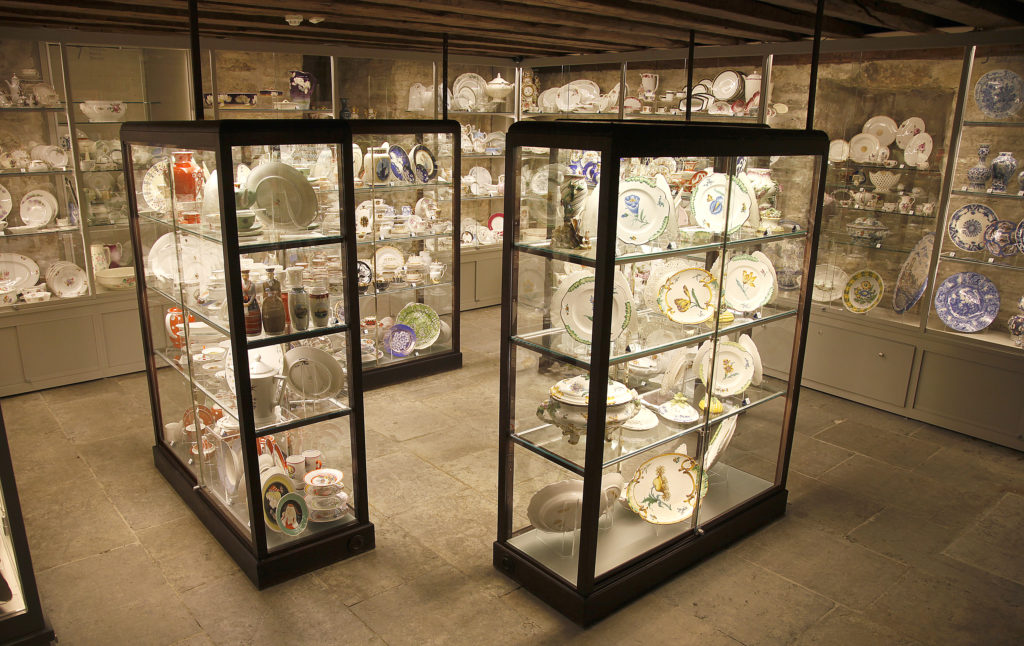
The ceramics open archive introduces the dishes that the citizens of Tallinn used to set their tables with, but also dishes that were made here. The main emphasis is on ceramics made in the 20th century. Exhibited are the products of companies from the first period of Estonian independence, Art Fund’s ceramics atelier (later ARS) and the decorative and applied ceramics of the ,,Ehituskeraamika Tehas” factory from the 1950s to the 1990s. There is a small collection of Estonian rural ceramics from the first period of independence and maiolica from the 16th to the 20th centuries. Some of the rarities displayed are Carl Fick’s Manufactory products from the 18th century. Items from Nikolai Langebraun’s Porcelain Factory have their own showcase.
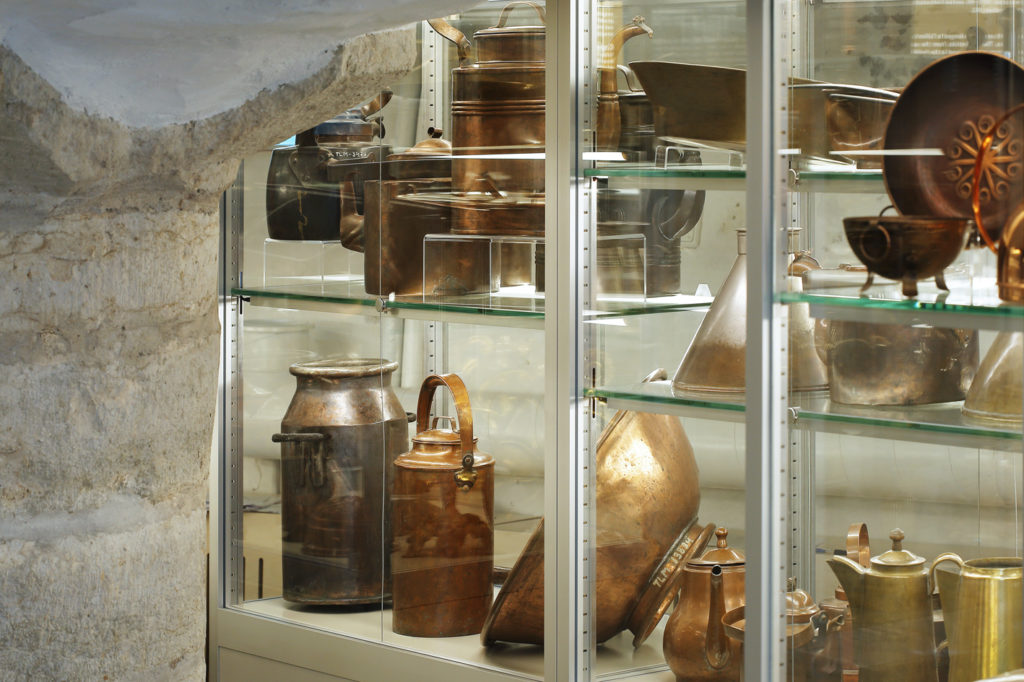
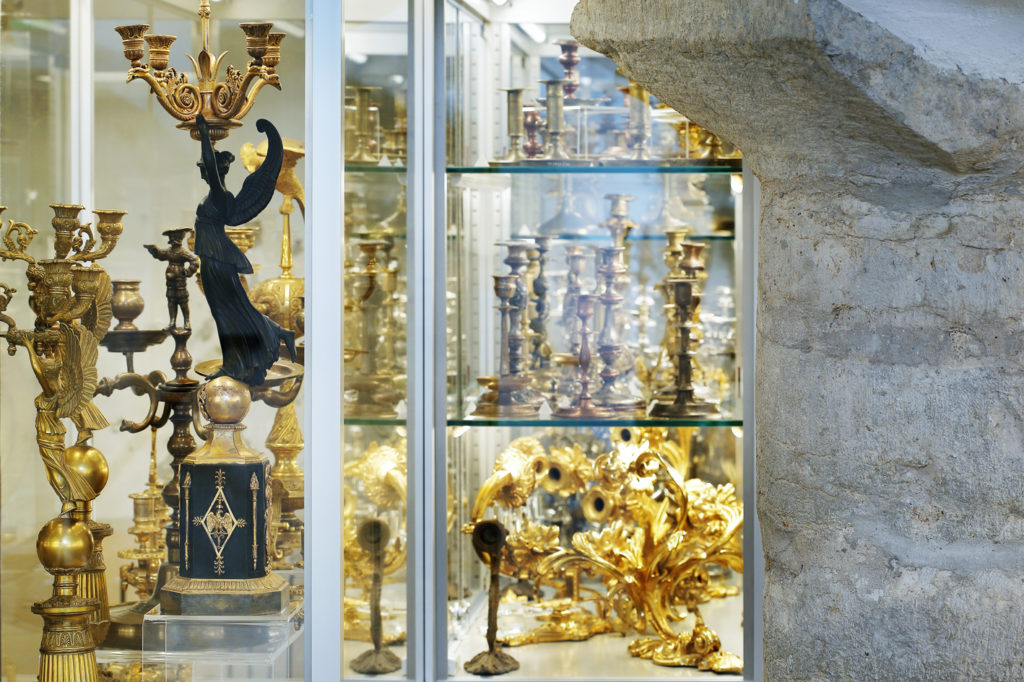
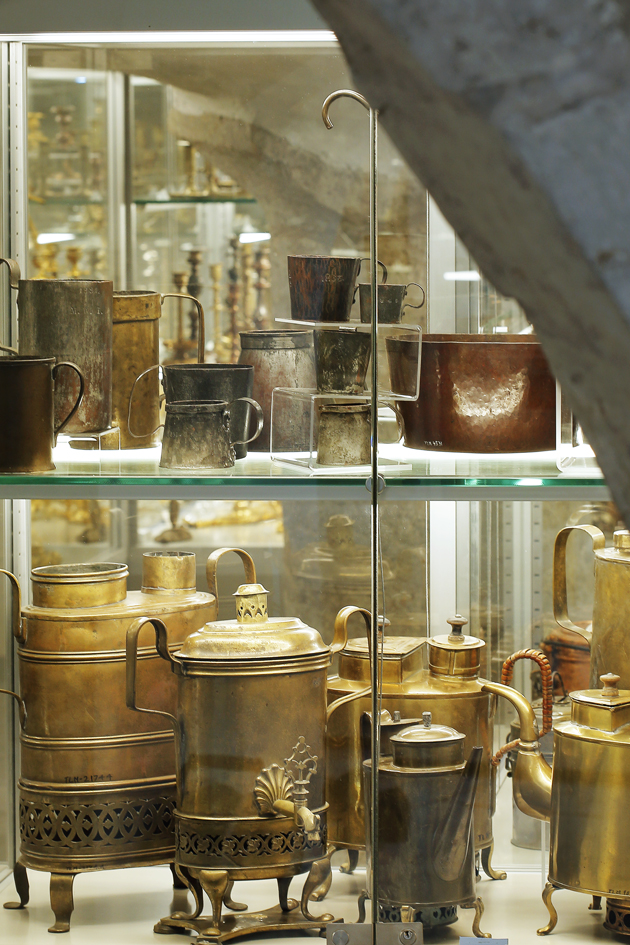
The copper, brass and bronze collections mostly consist of dishes from the 19th to the 20th century. There are also candlesticks and chandeliers, collection boxes, volumetric measures used in different centuries, samovars, copper utensils and souvenirs made by the Folk Art Masters’ Association ,,Uku” from the 1980s. A separate collection consists of bells, the oldest being the meeting clock of the Brotherhood of the Blackheads from 1472, which is now displayed on the exhibition about the Brotherhood on the second floor.
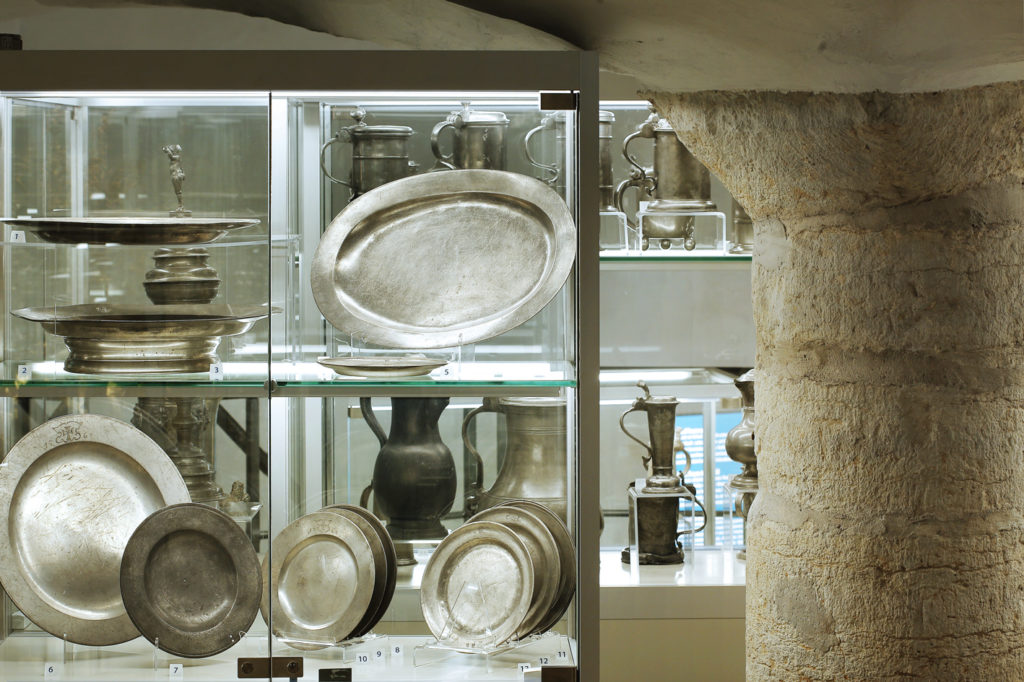
The tin collection of the City Museum is the most remarkable of its kind in Estonia. The diverse collection gives an overview of the works of Tallinn’s tin masters from the 16th to the 19th century. Nearly half of the collection consists of 18th century tableware from the Tallinn Town Hall and the Brotherhood of the Blackheads, the oldest of those being jugs from the 15th century.
Furthermore, the collection includes 17th to 20th century jugs and goblets, 19th century candlesticks, tableware and souvenirs, and early 20th century chocolate moulds.
The authors of the exhibition are curators Anne Ruussaar and Kristiina Hiiesalu (ceramics), Ene Heimvell (ceramics and copper) and Ando Pajus (tin), artists Aime Andresson ja Lilian Juhkam.
Information:
A visitor who is interested more in a topic or an item can find thorough information in the booklets. There are overviews of different collections and their history, different techniques and terms, in addition to signs and etiquettes. All of the information is available in Estonian, Russian and English.
- Products of a number of companies from the first Estonian Republic (AS Savi, Eesti I portselanitööstus, OÜ Kodukäsitöö ceramics atelier) time can be seen. From the rarities, products of Carl Fick’s Manufacture from the 18th century have been displayed. Items from Nikolai Langebraun’s Porcelain Factory have their own showcase.
- A lot of the ARS ceramics have reached the museum as a product sample or have been given to the museum.
- Uku’s products have been bought as product samples.
- Copper and other material dishes, samovars, chandeliers and measures have been in use in the homes of Tallinn’s citizens.
- Roman oil lamps are from a private collector’s collection.